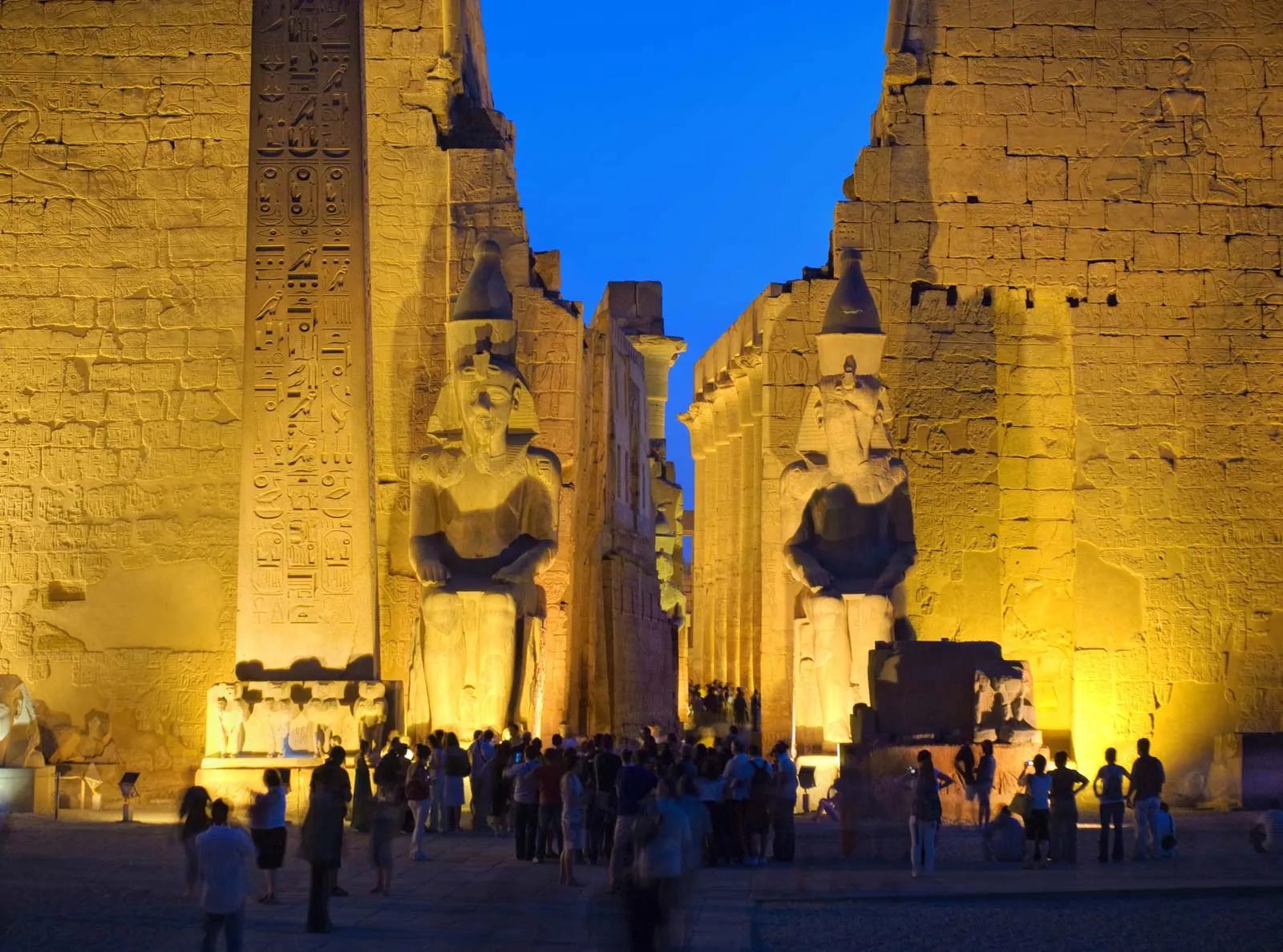
Karnak Temple is famous for its extraordinary scale, monumental stone architecture and the historical evidence preserved in its walls. Located on the east bank of the Nile in Luxor, southern Egypt, Karnak was one of the most important religious centers of ancient Thebes, the city known today as Luxor.
Unlike a monument commissioned by a single ruler and completed within one reign, Karnak developed over many centuries. Successive pharaohs built new sanctuaries, added courtyards, erected obelisks and commissioned inscriptions that recorded royal achievements and religious ceremonies.
The result is a vast archaeological landscape that helps historians understand ancient Egyptian religion, royal power, artistic traditions and architectural development. Its most celebrated feature is the Great Hypostyle Hall, a monumental space filled with 134 sandstone columns.
But Karnak is more than an impressive collection of stones. Its monuments preserve details about how Egyptian rulers presented themselves, how temples operated and how religious traditions changed through time.
Where Is Karnak Temple Located?
Karnak Temple lies in the northern part of modern Luxor, on the east bank of the Nile River in Upper Egypt. In antiquity, this region formed part of Thebes, a major political and religious center during several periods of Egyptian history.
The wider Theban archaeological landscape includes Karnak Temple and Luxor Temple on the east bank, together with important monuments on the west bank, such as the Valley of the Kings and the Temple of Hatshepsut.
Ancient Thebes and its Necropolis were inscribed on the UNESCO World Heritage List in 1979. This recognition reflects the exceptional archaeological and historical importance of the temples, tombs and other remains associated with the ancient city.
The History of Karnak Temple: A Monument Built by Generations
One of the most interesting facts about Karnak is that it was not built by one pharaoh. Its development took place across many centuries, with different rulers contributing buildings, statues, gateways and decorative programs.
Early development and the Middle Kingdom
Evidence of royal activity at Karnak reaches back to the early second millennium BCE. During the Middle Kingdom, the importance of Thebes increased, and rulers invested in the religious center associated with the local god Amun.
The reign of Senusret I is especially important in the early architectural history of the complex. Later rulers expanded the site, transforming it from an earlier sanctuary into a much larger collection of religious buildings.
The New Kingdom: A period of major expansion
Karnak became especially prominent during the New Kingdom, approximately 1550–1069 BCE. During this era, Egypt's rulers undertook ambitious construction projects and used temple architecture to express religious devotion, political authority and the achievements of the monarchy.
Hatshepsut, Thutmose III, Amenhotep III, Sety I and Ramesses II are among the rulers associated with important additions or decorative work at Karnak. Each contributed to a complex that already contained the work of earlier generations.
Later additions and continued use
Construction and religious activity did not stop with the New Kingdom. Later Egyptian dynasties, Ptolemaic rulers and Roman-period authorities also left traces at the site. This long sequence of additions makes Karnak particularly valuable for studying changes in architecture, royal representation and religious practice.
Why Was Karnak Temple Important in Ancient Egypt?
The principal sanctuary at Karnak was dedicated to Amun, a deity whose importance grew alongside the rise of Thebes. Amun was later closely associated with the sun god Ra, forming the widely known divine figure Amun-Ra.
The temple was a major setting for ceremonies, offerings and rituals performed by the religious establishment. It was also an institution with substantial economic resources. Temples could control land, receive goods and support large communities of priests, administrators, craftspeople and workers.
For kings, building at Karnak had significance beyond architecture. Monumental projects connected the ruler with the gods and presented royal authority as part of the order that sustained the Egyptian world.
The inscriptions and reliefs are therefore important historical evidence. They tell us about religious beliefs, royal ceremonies, military campaigns and the ways rulers wanted their achievements to be remembered.
The Great Hypostyle Hall: Karnak's Most Famous Landmark
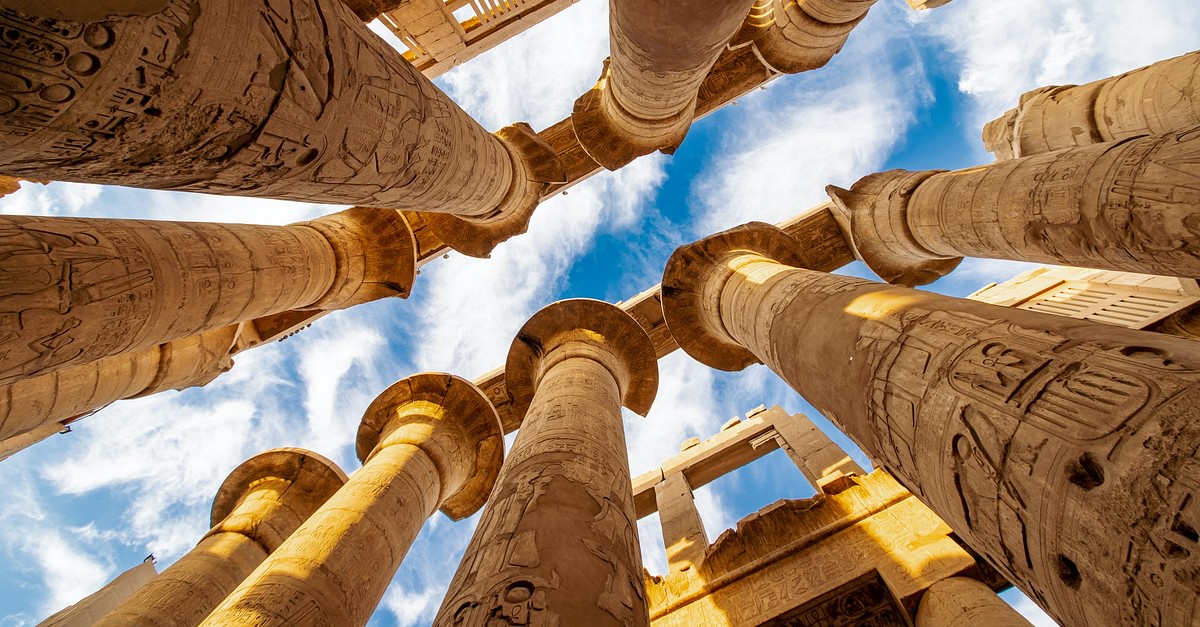
The Great Hypostyle Hall is among the most celebrated architectural spaces in ancient Egypt. It contains 134 massive sandstone columns arranged in 16 rows. The central twelve columns rise to approximately 21 metres, while the surrounding columns are smaller.
The hall's scale creates the impression of moving through a forest of stone. Its central aisle was taller than the side sections, allowing an elevated roof arrangement that admitted light through openings above the lower columns.
How was the hall built?
Construction of the Great Hypostyle Hall is principally associated with Sety I and his son Ramesses II, rulers of the Nineteenth Dynasty. Sety I initiated major work on the hall, while Ramesses II continued its development and decoration.
The columns were made from enormous stone blocks and shaped with architectural forms inspired by plants associated with the Egyptian environment, including papyrus. Their capitals, shafts and surrounding surfaces formed part of an integrated decorative program.
What do the carvings represent?
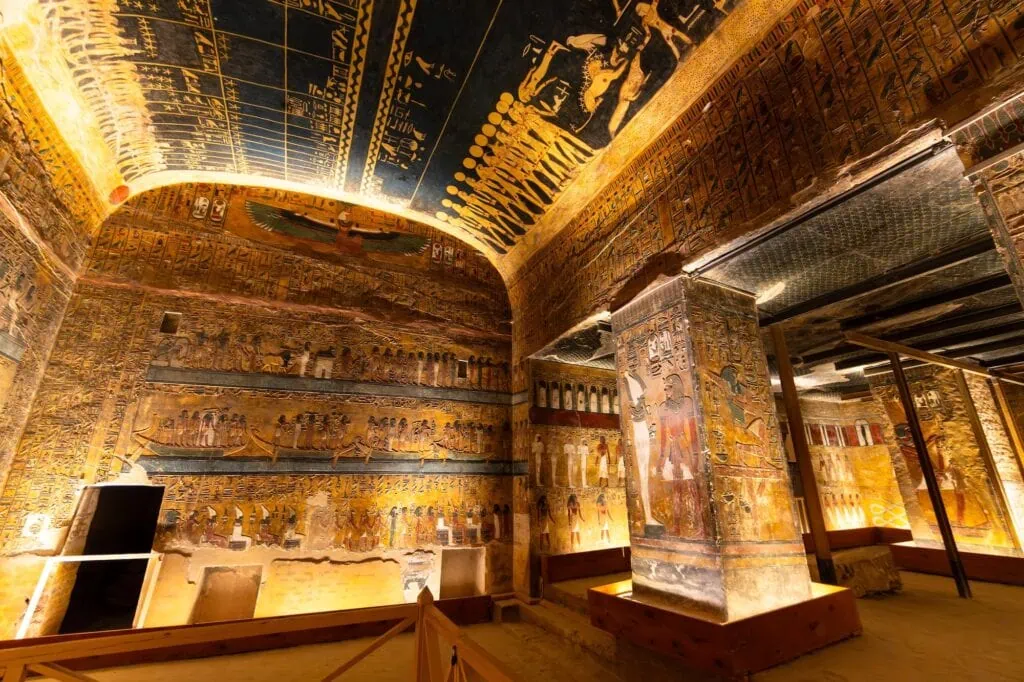
Reliefs throughout the hall depict kings interacting with deities, performing ritual acts and presenting offerings. These scenes were not simply decorative images. They communicated ideas about kingship, sacred duties and the relationship between the ruler and the divine world.
The decoration also reflects differences in artistic technique. Some surfaces feature raised relief, while others use sunk relief, in which the outlines and figures are carved into the stone surface.
The hall is consequently an important resource for Egyptologists studying inscriptions, artistic methods and the political and religious ideas of the New Kingdom.
The Obelisks of Karnak: Stone Monuments of Royal Power
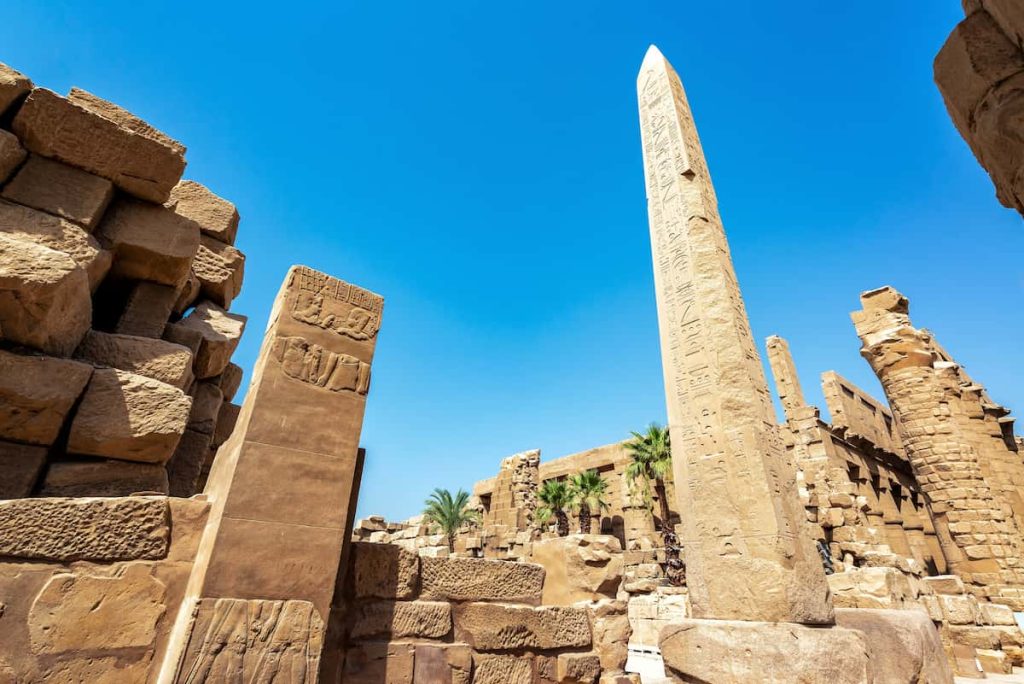
Obelisks are tall, tapering stone monuments that typically end in a small pyramid-shaped point. In ancient Egypt, they were associated with solar symbolism and royal dedication. Their inscriptions could record the name, titles and achievements of the ruler who commissioned them.
Karnak is particularly associated with the obelisks of Hatshepsut, one of Egypt's most prominent female pharaohs. Her building projects at the complex demonstrate the resources and technical skills available to the royal administration.
Carving and transporting a large obelisk required careful planning, extensive labor and sophisticated stoneworking. The monuments therefore reveal important aspects of ancient Egyptian engineering as well as royal ideology.
Hieroglyphics and Temple Reliefs: Reading the Walls of Karnak
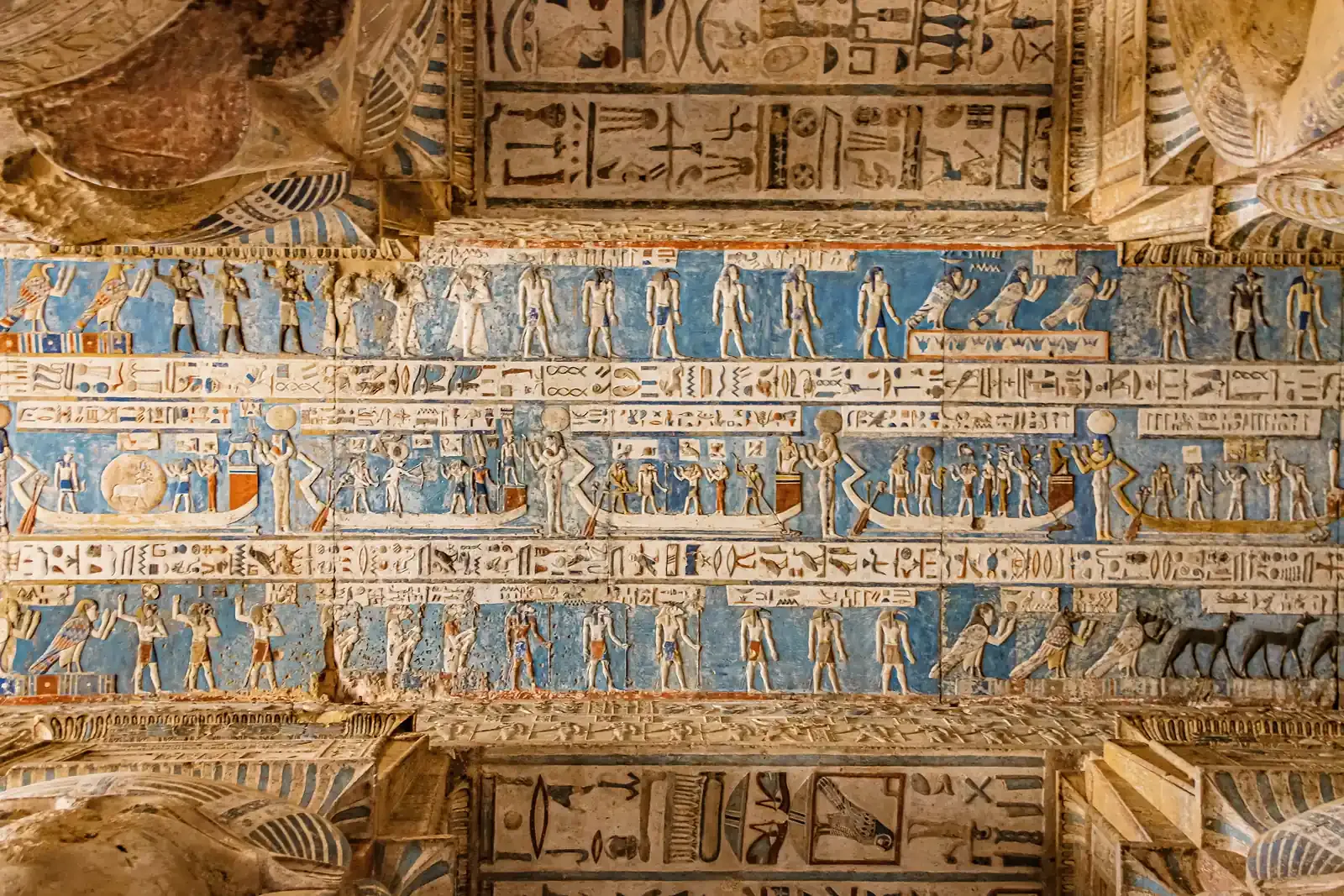
Hieroglyphic inscriptions are among the most valuable features of Karnak. They preserve royal names, religious formulas, ritual scenes and records of building activity. Together with reliefs and architectural remains, these texts help researchers reconstruct the history of the complex.
The inscriptions were created for different purposes. Some identified a king or deity; others described a ritual, commemorated a royal achievement or recorded a dedication associated with a temple structure.
It is important to read these scenes in their historical context. Royal inscriptions often present events from the ruler's point of view, combining historical information with idealized representations of kingship.
This is one reason Karnak is so significant to archaeology: its surviving inscriptions can be compared with evidence from other temples, tombs and historical sources to build a more complete picture of ancient Egypt.
The Sacred Lake: Daily Rituals at Karnak
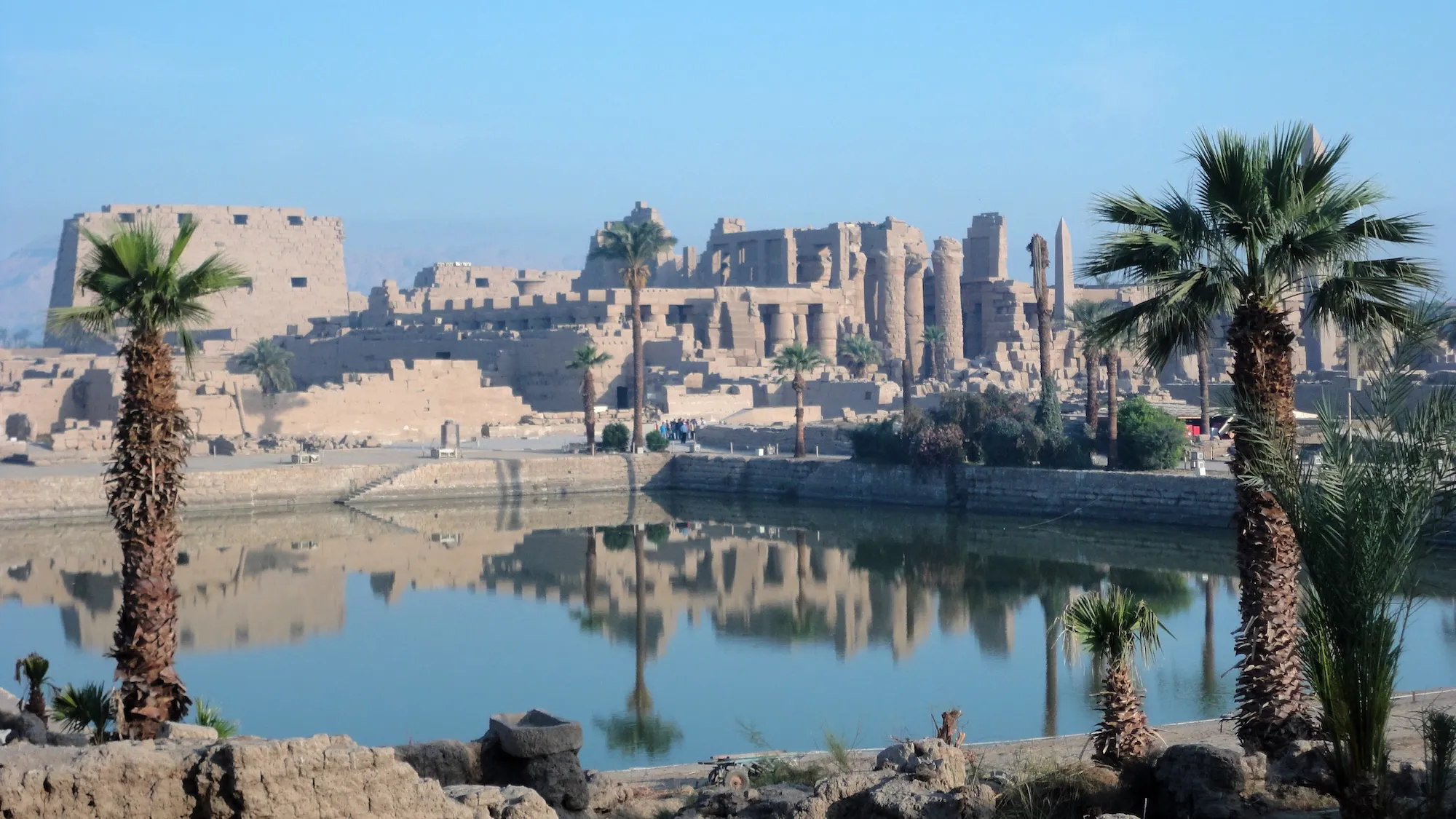
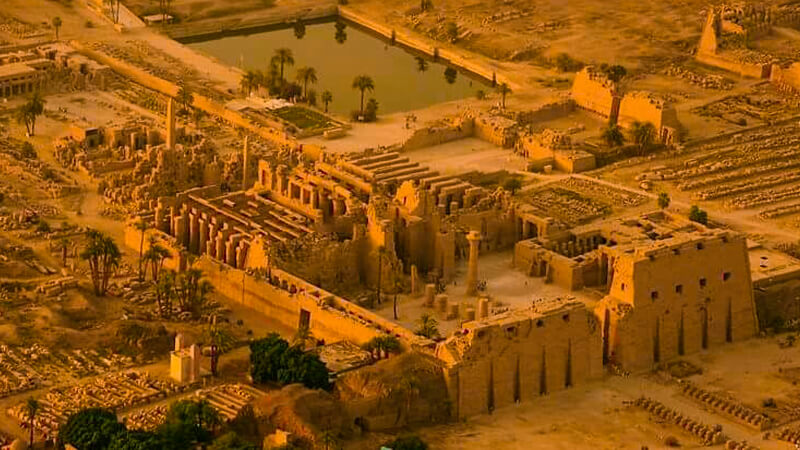
The Sacred Lake is another distinctive feature of the Karnak complex. It formed part of the temple landscape and was associated with ritual purification and the religious activities of the priesthood.
Water had practical and symbolic importance in Egyptian temple settings. Purification was an important part of ritual life, and the presence of a designated sacred body of water helped organize activities within the complex.
Today, the lake offers a different perspective on Karnak. Away from the towering columns and monumental gateways, it helps visitors imagine how the wider temple precinct was arranged and how its different spaces served different purposes.
The Avenue of Sphinxes and the Opet Festival
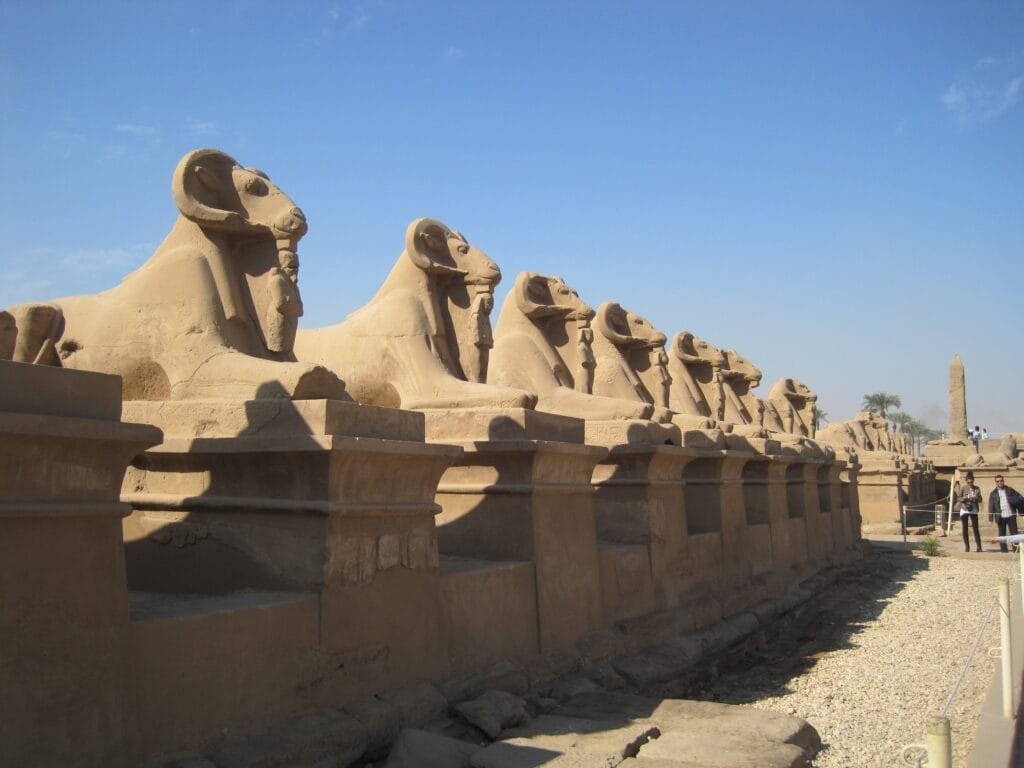
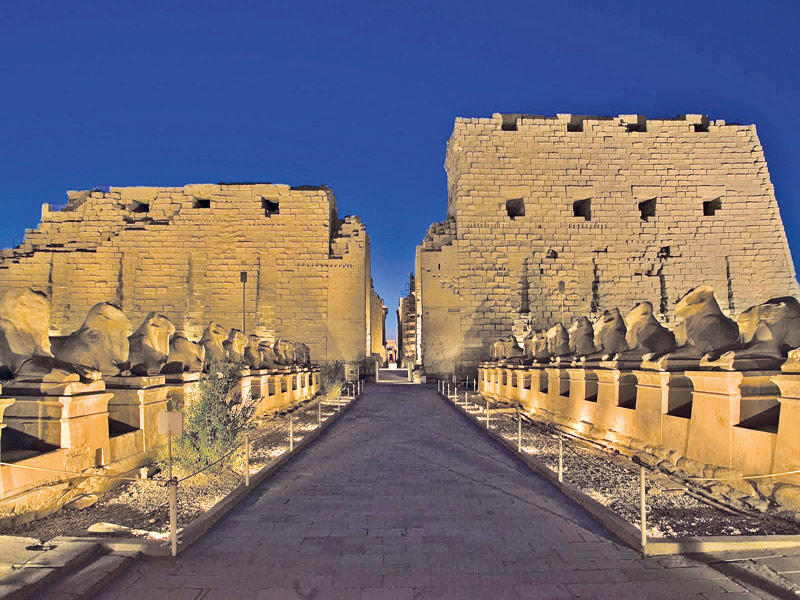
Karnak was connected to Luxor Temple by an ancient processional route lined with sphinxes. Known today as the Avenue of Sphinxes, this route formed an important link between two major religious centers in ancient Thebes.
The avenue was associated with the Opet Festival, a major celebration in which sacred images of Amun, Mut and Khonsu were carried in ceremonial processions between the temples. The festival connected the religious institutions of Karnak and Luxor and renewed important ideas about kingship and divine order.
The route also demonstrates that ancient Egyptian temples should not always be understood as isolated buildings. They could form part of a larger sacred landscape, with ceremonial roads and connected spaces giving meaning to the city around them.
For more context about the southern sanctuary and its architecture, read our guide to Luxor Temple .
Ancient Egyptian Architecture at Karnak
Karnak provides a detailed record of the development of ancient Egyptian monumental architecture. Its structures include massive gateways known as pylons, open courtyards, columned halls, inner sanctuaries, obelisks and smaller chapels.
These elements were arranged to create transitions between different spaces. Large entrances and open courts led toward more enclosed architectural areas, while the decoration and accessibility of particular spaces reflected their religious and ceremonial roles.
Columns inspired by the natural world
Many columns in Egyptian temples use forms inspired by plants, particularly papyrus and lotus. Their shapes demonstrate how Egyptian architects incorporated natural imagery into monumental stone structures.
The capitals and shafts were also surfaces for decoration. Their scale allowed architects and artists to combine structural engineering with carefully organized visual symbolism.
Pylons and courtyards
Temple pylons are monumental entrance structures, usually formed by two large towers framing a central gateway. They established a dramatic threshold between the exterior and the temple interior.
Courtyards provided more open spaces within the complex. Beyond them, columned halls and inner rooms created increasingly enclosed architectural settings. The precise layout differed across the complex because Karnak grew through successive construction phases.
Which Pharaohs Contributed to Karnak Temple?
Many rulers left their mark on Karnak. The following examples illustrate how different generations contributed to its growth.
Senusret I
Associated with important early construction during the Middle Kingdom, helping establish the foundation for later expansion of the sanctuary.
Hatshepsut
Known for ambitious royal building projects, including obelisks and monuments that remain important to the history of Karnak.
Thutmose III
Expanded the complex with important buildings, including the Akh-menu, associated with royal and religious commemorations.
Amenhotep III
One of the major royal builders of the Eighteenth Dynasty, associated with extensive architectural activity at Thebes.
Sety I
Initiated major work on the Great Hypostyle Hall and commissioned some of its celebrated relief decoration.
Ramesses II
Continued work on the Great Hypostyle Hall and contributed to the monumental architecture and inscriptions that characterize the site.
These examples represent only part of Karnak's long building history. The complex is best understood as the accumulated work of generations rather than the creation of a single ruler.
What Karnak Reveals About Ancient Egyptian Society
The importance of Karnak extends beyond its religious function. Its scale and decoration provide evidence of how ancient Egyptian society organized labor, managed resources and supported large construction projects.
Quarrying and transporting stone, preparing foundations, carving columns and decorating walls required skilled workers, administrators and a reliable supply of materials. These activities reveal the organizational capabilities of the state and the institutions connected with the temple.
The complex also demonstrates the relationship between religion and political power. Royal inscriptions frequently placed kings within a sacred framework, presenting construction, offerings and military success as actions that supported the established order.
From an archaeological perspective, the combination of inscriptions, architectural remains and decorated surfaces makes Karnak a valuable source for studying ancient Egyptian culture across multiple historical periods.
What Should You Look for When Visiting Karnak Temple?
A visit to Karnak becomes more meaningful when the main structures are understood as parts of a connected historical landscape. Rather than focusing only on photographs, take time to observe the architecture, inscriptions and relationships between different spaces.
- The monumental entrance: Observe the scale of the pylons and the way the entrance establishes the temple's architectural axis.
- The Great Hypostyle Hall: Look upward at the columns and notice the differences between the central aisle and the surrounding rows.
- Carved reliefs: Examine the figures, hieroglyphics and scenes of kings interacting with deities.
- Obelisks: Notice their height, shape and inscriptions, which connect royal commemoration with ancient Egyptian religious ideas.
- The Sacred Lake: Consider how water and purification were incorporated into the temple's ceremonial environment.
- The wider complex: Remember that Karnak includes multiple precincts, chapels and structures from different historical periods.
Preserving Karnak for Future Generations
Karnak remains an active subject of archaeological research and conservation. Documenting inscriptions, studying architectural phases and protecting fragile stone surfaces all contribute to a better understanding of the site.
The complex also faces the practical challenges associated with a major archaeological monument exposed to weather, environmental conditions and large numbers of visitors. Conservation requires careful research and long-term attention to the physical remains.
Protecting Karnak means preserving more than its monumental appearance. The buildings, inscriptions and archaeological context together form an irreplaceable record of ancient Egyptian history.
Why Is Karnak Temple One of Egypt's Greatest Monuments?
Karnak Temple is famous because it brings together extraordinary architecture, a long history of royal construction and an exceptional record of ancient Egyptian religious and political life.
Its 134-column Great Hypostyle Hall, obelisks, carved inscriptions and Sacred Lake reveal different aspects of the civilization that shaped the landscape of ancient Thebes. The work of successive rulers makes the complex particularly valuable for understanding how architecture and religious institutions developed over time.
Studying Karnak also changes the way we see ancient monuments. They are not merely impressive ruins; they are historical sources that help us investigate the beliefs, technologies, institutions and artistic achievements of the people who created them.
For anyone interested in ancient Egypt, Karnak remains one of the most informative places to explore the relationship between history, architecture and culture.
Common questions
Frequently Asked Questions About Karnak Temple
1. Why is Karnak Temple famous?
Karnak is famous for its vast temple complex, the Great Hypostyle Hall with 134 columns, its obelisks, hieroglyphic inscriptions and the long history of royal construction that shaped ancient Thebes.
2. Who built Karnak Temple?
Many rulers contributed to Karnak over centuries. Important builders included Senusret I, Hatshepsut, Thutmose III, Sety I and Ramesses II. The complex was expanded and modified by later rulers as well.
3. How many columns are in Karnak's Great Hypostyle Hall?
The Great Hypostyle Hall contains 134 sandstone columns arranged in 16 rows. Its central twelve columns are approximately 21 metres tall.
4. Where is Karnak Temple located?
Karnak is located on the east bank of the Nile in Luxor, southern Egypt, within the archaeological landscape of ancient Thebes.
5. Was Karnak Temple dedicated to Amun-Ra?
The principal precinct at Karnak was dedicated to Amun, who became closely associated with Ra as Amun-Ra. The wider complex also included precincts and structures associated with other deities.
6. What connected Karnak Temple and Luxor Temple?
An ancient processional avenue lined with sphinxes connected the two temples. The route was associated with the Opet Festival and ceremonial processions.
7. What can visitors see at Karnak Temple?
Visitors can explore monumental gateways, the Great Hypostyle Hall, obelisks, carved reliefs, hieroglyphic inscriptions, courtyards and the Sacred Lake. Access to individual areas can vary, so check current site information before visiting.
Historical References and Further Reading
This article is an educational introduction to Karnak Temple. The following institutional resources provide further historical and archaeological information.
- Egypt's Ministry of Tourism and Antiquities — Karnak
- UNESCO World Heritage Centre — Ancient Thebes with its Necropolis
- Great Hypostyle Hall Project — About the Hypostyle Hall
Historical interpretations and archaeological knowledge may develop as new research is published. Consult institutional resources for detailed academic studies.