The Temple of Hatshepsut is one of the most distinctive ancient monuments on the west bank of Luxor, Egypt. Built at Deir el-Bahari during the Eighteenth Dynasty, the temple is associated with Queen Hatshepsut, a ruler whose reign left a lasting mark on ancient Egyptian architecture, religion and international trade.
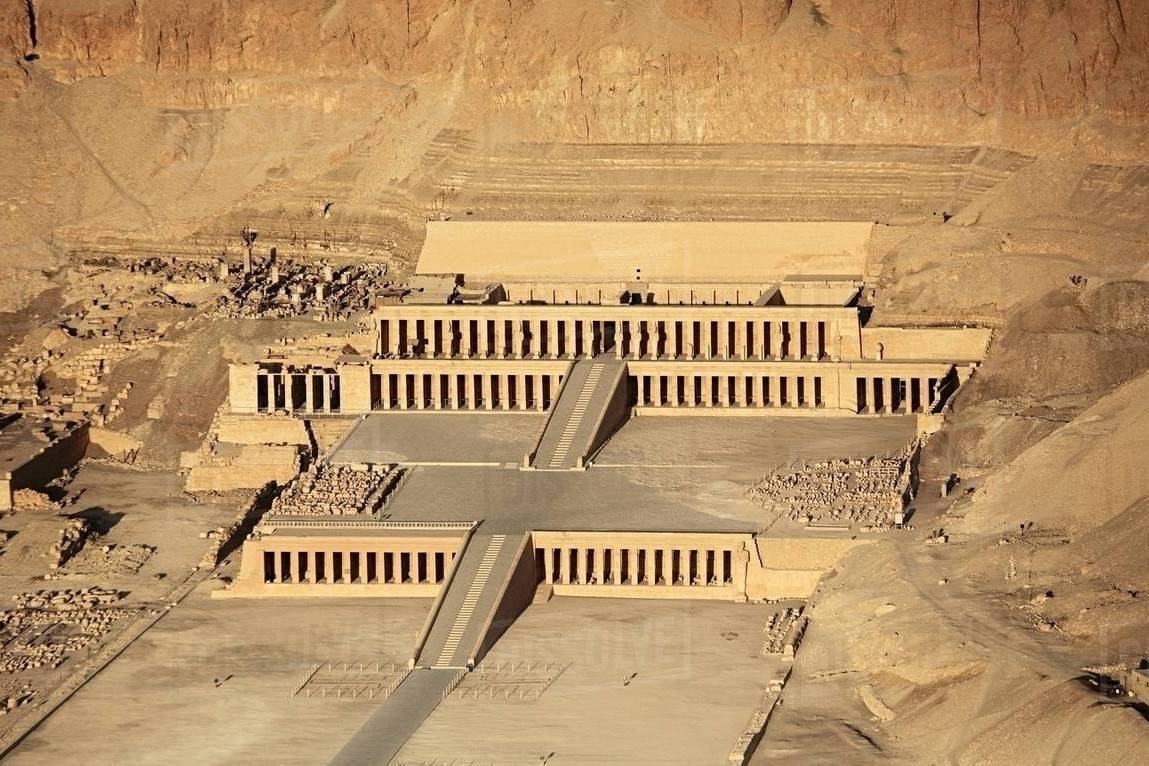
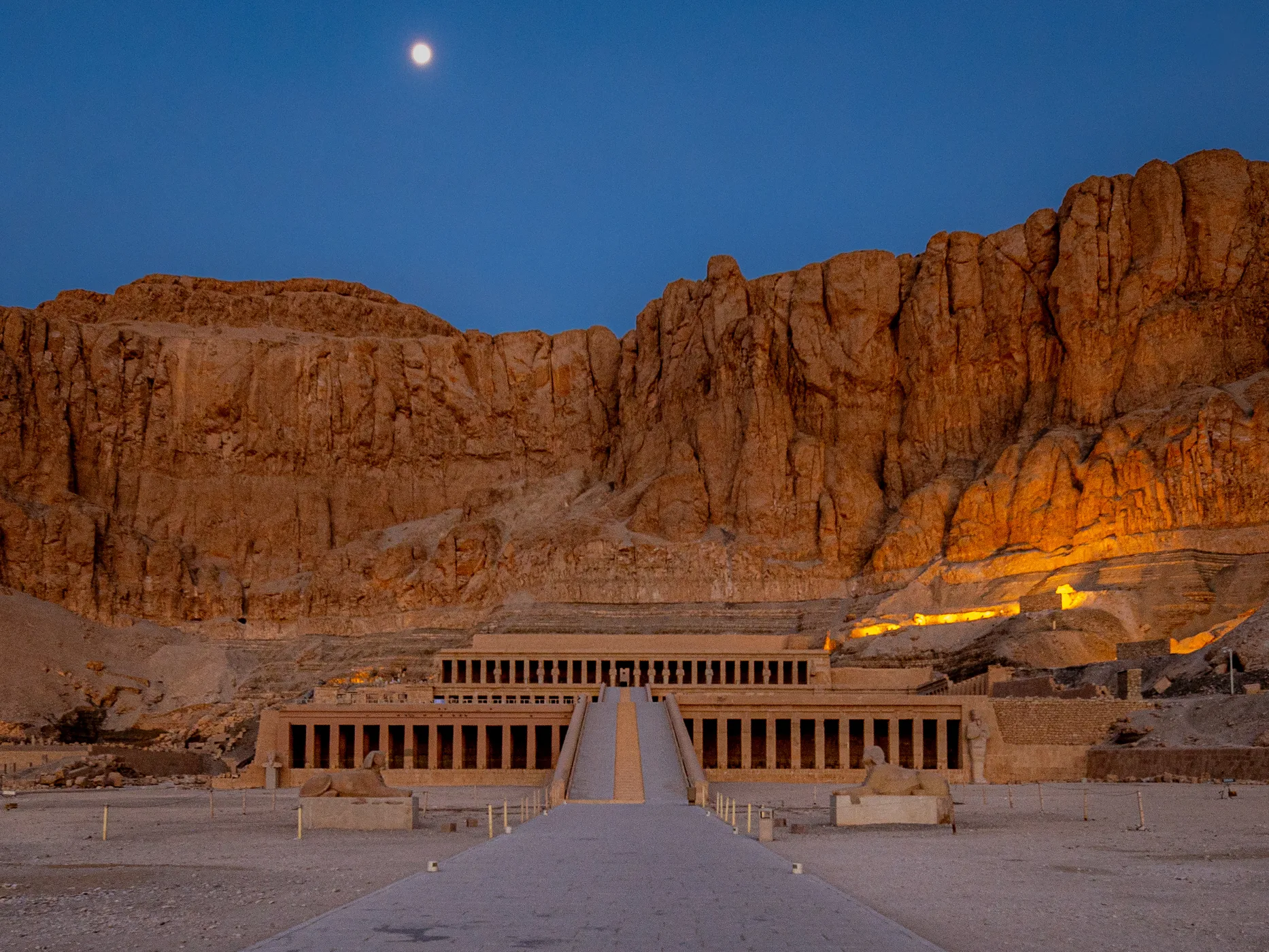
Set against a dramatic limestone cliff, the temple is famous for its three rising terraces, long colonnades and carefully planned relationship with the surrounding landscape. Its design differs from the familiar image of towering pyramids, offering another perspective on the architectural achievements of ancient Egypt.
Hatshepsut's story is equally remarkable. After initially serving as regent for the young Thutmose III, she assumed the full role of pharaoh. Her monuments, royal inscriptions and trading expeditions reveal how she presented her authority and strengthened Egypt's connections with other regions.
Today, the Temple of Hatshepsut is an important place for understanding the history of the female pharaoh, royal mortuary architecture and religious traditions in New Kingdom Egypt. Its reliefs and colonnades provide historical evidence that complements what is known from other monuments in Luxor.
Where Is the Temple of Hatshepsut in Luxor, Egypt?
The Temple of Hatshepsut is located at Deir el-Bahari on the west bank of the Nile in Luxor, Upper Egypt. This archaeological landscape lies opposite the eastern bank, where the major temple complexes of Karnak and Luxor stand.
The west bank of ancient Thebes was closely associated with royal burials, mortuary temples and religious ideas connected with death and renewal. The cliffs and desert valleys created a distinctive setting for monumental structures dedicated to deceased rulers and their continuing religious cults.
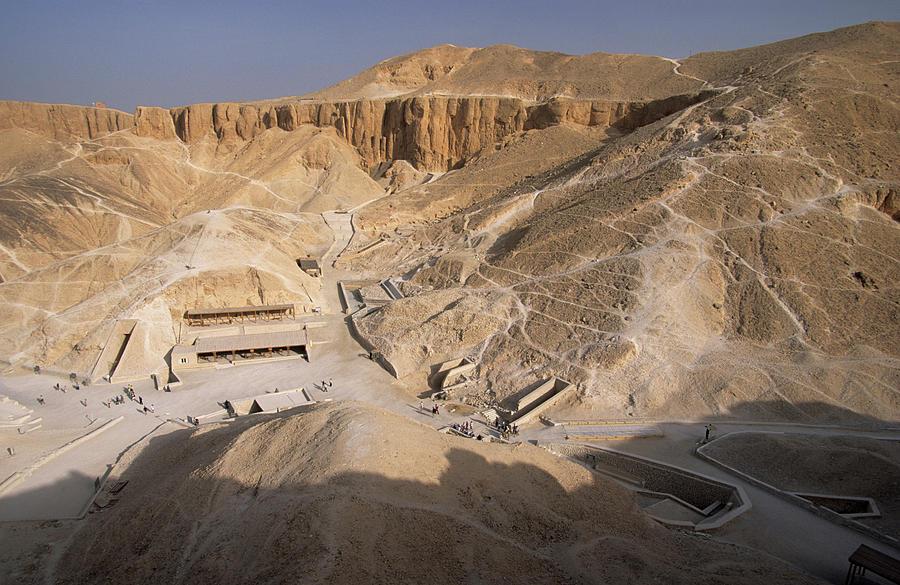
Deir el-Bahari contains more than one important monument. Hatshepsut's temple stands alongside earlier archaeological remains associated with the Middle Kingdom ruler Mentuhotep II. The wider landscape also connects with the nearby Valley of the Kings and other important west-bank sites.
For the official monument description and visitor information, consult the Egyptian Ministry of Tourism and Antiquities' Temple of Hatshepsut page.
Queen Hatshepsut: The Woman Who Became Pharaoh
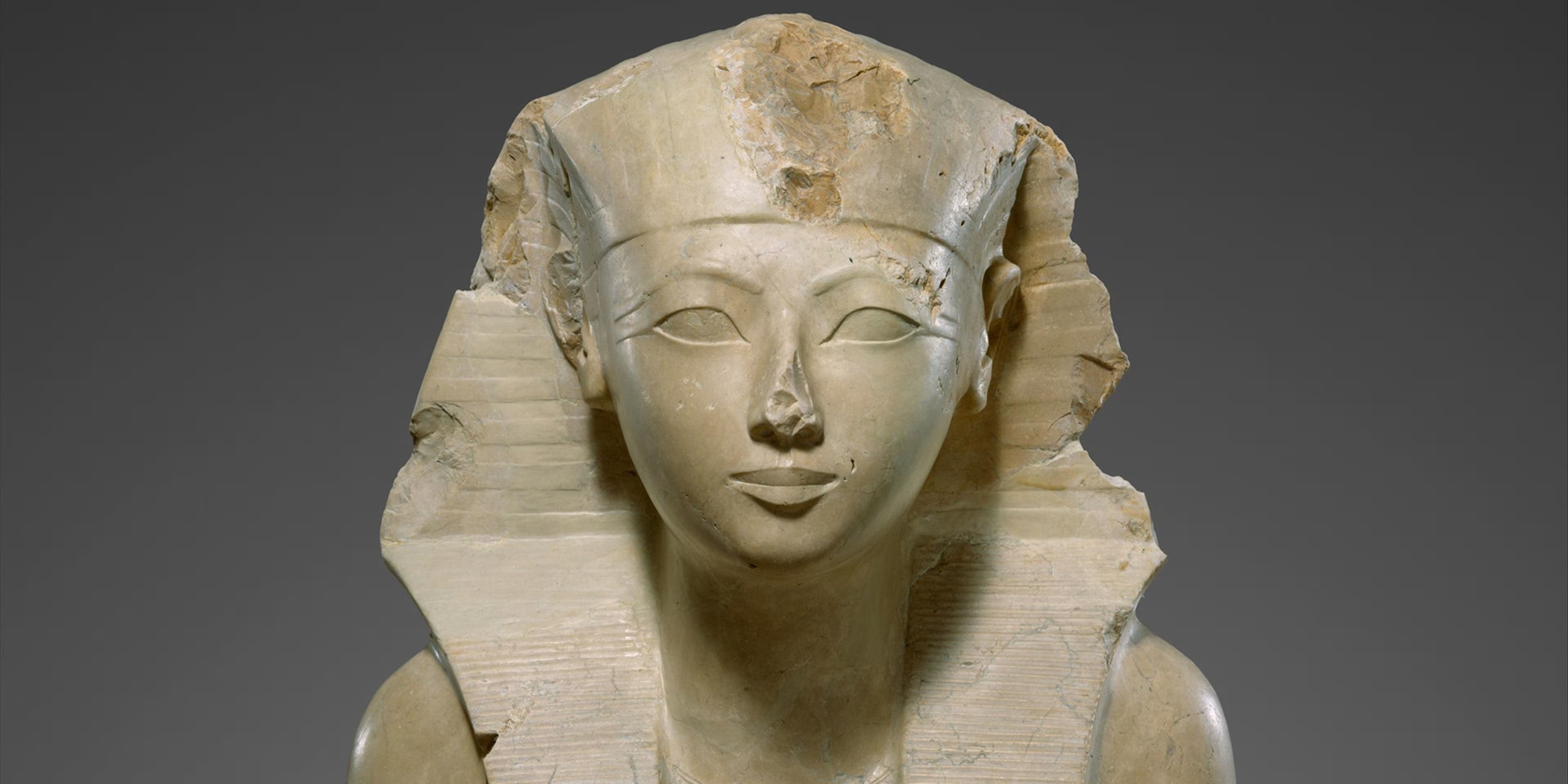
Hatshepsut lived during the Eighteenth Dynasty, one of the important periods of ancient Egyptian history. She was the daughter of Thutmose I and became the principal royal wife of Thutmose II. Her position within the royal family helped shape her later role in Egypt's government.
When Thutmose II died, his son Thutmose III was still young. Hatshepsut initially acted as regent, overseeing royal affairs on his behalf. She subsequently adopted the full royal position of pharaoh, ruling alongside Thutmose III for much of her reign.
Her rise to power is one of the most studied episodes in ancient Egyptian political history. Rather than being known only as a queen consort, Hatshepsut exercised the authority of a ruling king and commissioned monuments that expressed her legitimacy, religious role and place in the royal tradition.
How did Hatshepsut establish her authority?
Royal inscriptions and temple reliefs helped communicate Hatshepsut's position. Some texts emphasized her royal ancestry and divine association, while official images represented her using traditional symbols of kingship. These artistic choices followed established Egyptian conventions for portraying pharaohs.
In some statues and reliefs, Hatshepsut appears with a royal headdress and other kingly attributes, including the false beard. Such representations should be understood within the artistic and political traditions of ancient Egypt rather than as simple portraits in the modern sense.
How long did Hatshepsut rule Egypt?
Hatshepsut's reign is generally dated to the fifteenth century BCE, approximately 1473–1458 BCE in a commonly used chronology. Exact dates can differ slightly among chronological reconstructions. Her rule lasted roughly two decades and was marked by major building projects and commercial activity.
Hatshepsut is remembered as one of the most prominent female rulers of ancient Egypt. Her monuments, particularly the mortuary temple at Deir el-Bahari, remain central to understanding her political achievements and the history of the New Kingdom.
History of the Temple of Hatshepsut at Deir el-Bahari
The mortuary temple was built during Hatshepsut's reign and became one of the defining monuments of her royal legacy. Known by the ancient Egyptian name Djeser-djeseru, commonly translated as "Holy of Holies," it was designed as a sacred place for royal worship and religious ceremonies.
The temple is traditionally associated with Senenmut, a senior official who served Hatshepsut and held important administrative responsibilities. Its design uses terraces, colonnades and long ramps to connect the different levels, creating a strong visual relationship between the monument and the natural cliff behind it.
A mortuary temple with a religious purpose
Ancient Egyptian mortuary temples were not merely monuments celebrating a ruler's achievements. They also supported religious rituals associated with the deceased king or queen. In Hatshepsut's temple, ceremonies and offerings were connected with her continuing cult after death.
The temple also included areas associated with other deities and royal family members. Amun held a particularly important place in the religious programme, while sections were dedicated to Hathor, Anubis and Hatshepsut's father, Thutmose I.
How the monument changed over time
Like many ancient Egyptian monuments, the temple experienced changes after the reign of its original patron. Some images and inscriptions associated with Hatshepsut were later altered or damaged. The reasons and timing of these actions remain subjects of historical discussion.
Later periods brought further changes in the use and condition of the site. Archaeological research, documentation and conservation have helped scholars understand its original layout and protect the surviving reliefs and architectural remains.
Temple of Hatshepsut Architecture: The Three Terraces
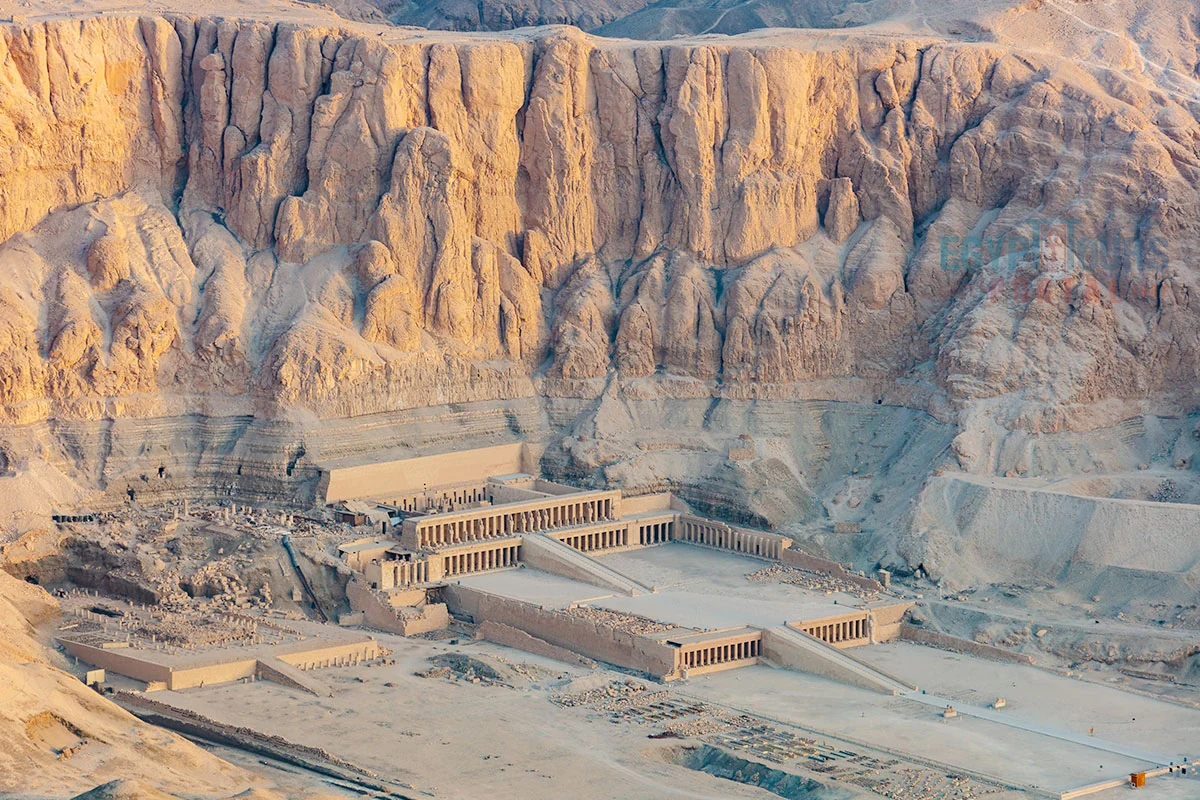
One of the main reasons the Temple of Hatshepsut is famous is its unusual architectural composition. Instead of relying on a single towering entrance or a conventional pyramid form, the temple rises through three broad terraces connected by ramps and framed by colonnades.
The arrangement creates a series of carefully ordered horizontal levels against the steep limestone cliffs. The relationship between straight architectural lines and the natural rock face is a defining feature of the monument.
The lower terrace
The lower approach introduces visitors to the monument's carefully planned axis. In antiquity, processional routes connected sacred spaces and helped organize movement through the temple complex. The surviving architecture allows visitors to appreciate the scale of the original design.
The middle terrace
The middle level is especially important for its decorated porticoes and reliefs. Among the best-known scenes are those connected with Hatshepsut's expedition to Punt and the royal presentation of her legitimacy.
The reliefs are valuable historical sources because they combine images and inscriptions to communicate events, religious ideas and royal authority. They also demonstrate the skill of the craftsmen who carved and prepared the decorated surfaces.
The upper terrace
The upper level contains a large courtyard and the principal sanctuary area. Statues of Hatshepsut in the form associated with Osiris once stood against its pillars. The arrangement emphasized the temple's mortuary role and its connection with religious beliefs about the afterlife.
The upper terrace also helps reveal the architectural relationship between the temple, the surrounding cliffs and the sacred landscape of Deir el-Bahari.
Hatshepsut's Expedition to the Land of Punt
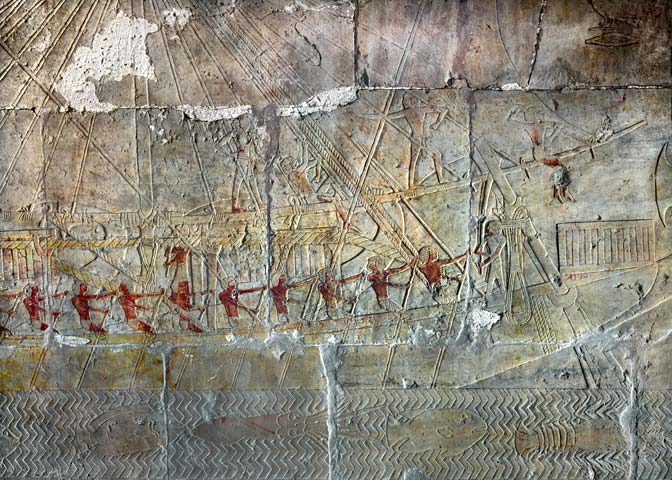
One of the most famous subjects represented at the Temple of Hatshepsut is the expedition to the Land of Punt. The reliefs on the middle terrace depict an organized trading mission and the goods that the Egyptians brought back.
Punt was a trading region known to ancient Egyptians for valuable materials and products. Its exact location remains debated, although it is commonly associated with regions around the southern Red Sea and the Horn of Africa.
What did the Egyptians bring back from Punt?
Egyptian records and temple scenes associate the expedition with products such as incense, aromatic resins, ebony, ivory and other valuable goods. These materials had practical, ceremonial and economic importance in ancient Egyptian society.
Incense and aromatic resins were particularly significant in religious settings, where they could be used during rituals. Other imported goods demonstrated the reach of Egyptian trade and the resources available to the royal court.
Why are the Punt reliefs historically important?
The scenes provide evidence of how ancient Egyptians represented foreign lands, trading activities and royal expeditions. They include depictions of people, dwellings, landscapes, animals and goods, although these images should be interpreted as official royal representations rather than modern documentary photography.
The reliefs also connect commercial activity with Hatshepsut's image as a successful ruler. By presenting the expedition as an achievement of her reign, the temple linked international exchange with royal authority and divine approval.
Reliefs, Hieroglyphs and Religious Stories

The walls of the Temple of Hatshepsut preserve carved scenes and inscriptions that help explain the monument's religious and political purpose. These decorations were carefully planned as part of the architecture, not added merely as surface ornament.
Royal rituals and religious ceremonies
Some reliefs show ceremonies and offerings associated with temple worship. Such scenes reveal the importance of ritual in ancient Egyptian religion and the role of the ruler in maintaining relationships between the human and divine worlds.
The divine birth narrative
Hatshepsut's temple contains imagery connected with the narrative of her divine birth. This religious story presented her kingship as supported by the god Amun and helped explain her right to rule within the ideological traditions of ancient Egypt.
Divine birth narratives appear in the context of Egyptian royal ideology. They should be understood as religious and political statements from the ancient world, not as accounts written according to modern historical methods.
Why are the inscriptions important today?
Hieroglyphic texts and carved scenes allow researchers to investigate royal titles, religious beliefs, ritual practices and historical claims. Their meaning becomes clearer when studied alongside the architecture and other archaeological evidence from the period.
Visitors can appreciate the craftsmanship of the surviving decoration while remembering that the temple is a fragile archaeological site. Touching reliefs and climbing into restricted areas can damage material that has survived for thousands of years.
Hatshepsut's Achievements and Legacy
Hatshepsut is remembered for her ambitious building programme, her use of royal imagery and her support for commercial expeditions. Her monuments were part of a wider effort to present the stability and religious legitimacy of the state during the Eighteenth Dynasty.
Monumental construction
The Temple of Hatshepsut is among her most celebrated building projects. She also supported construction and restoration work elsewhere, including at Karnak. Her monuments reflect the resources, planning and specialist craftsmanship available to the royal administration.
Trade and international connections
The expedition to Punt is a major part of her historical reputation. It illustrates the importance of obtaining valuable materials through long-distance exchange and shows how royal monuments could record such activities.
How was Hatshepsut remembered after her death?
Some of Hatshepsut's images and names were removed or altered during the period following her reign. The motives behind these actions are debated by scholars and may have involved royal succession, political considerations and changing traditions of kingship.
Her historical significance was reconstructed through the study of inscriptions, monuments, statues and archaeological remains. Today, Hatshepsut is widely recognized as one of ancient Egypt's most notable rulers, and her temple is central to that legacy.
What to See at the Temple of Hatshepsut
A visit to the temple offers more than a view of its famous terraces. The different architectural levels and surviving reliefs reveal how the monument combined religious function, royal representation and landscape design.
- The three terraces: Notice how each level rises toward the cliffs and how the colonnades create a strong architectural rhythm.
- The middle terrace reliefs: Look for scenes associated with the expedition to Punt and the presentation of royal authority.
- The upper courtyard: Observe the scale of the open space and its relationship with the sanctuary and surrounding rock.
- Carved inscriptions: Examine the surviving hieroglyphs and figures from a respectful distance, following site rules.
- The limestone cliffs: Consider how the natural landscape influenced the temple's placement and appearance.
- The wider Deir el-Bahari landscape: Remember that Hatshepsut's monument forms part of a larger archaeological area with a long history.
Best Time to Visit the Temple of Hatshepsut
Luxor experiences very hot conditions during much of the summer, particularly around midday. Many visitors prefer cooler months and an early start to explore outdoor monuments more comfortably.
The temple has substantial outdoor areas, ramps and walking routes, so comfortable footwear, sun protection and drinking water are useful. Visitors should take account of their own needs and follow any restrictions on items brought into the site.
Opening hours and visitor arrangements can change. Check the official Ministry of Tourism and Antiquities information close to your travel date rather than relying on old schedules or prices copied from third-party websites.
Temple of Hatshepsut Tickets, Opening Hours and Visitor Tips
Admission prices, opening times, student discounts and other ticket conditions may change. Consult the official monument listing or the authorized ticket office for the latest information before travelling.
Allow time to explore the terraces and decorated areas without rushing. If you are visiting several west-bank monuments in one day, consider the time required for transport, entry arrangements and walking between different locations.
Visitors should also be aware that conservation work or operational decisions may affect access to particular areas. Respect any temporary closures and follow instructions from staff.
For current information, visit the official Temple of Hatshepsut page from Egypt's Ministry of Tourism and Antiquities.
Places to Visit Near the Temple of Hatshepsut
Hatshepsut's temple is part of Luxor's wider west-bank archaeological landscape. Several nearby monuments help explain the religious, political and social history of ancient Thebes.
- Valley of the Kings: A royal burial ground containing tombs associated with several New Kingdom rulers, including Tutankhamun.
- Valley of the Queens: A separate burial area associated with queens and members of royal families.
- Colossi of Memnon: Two monumental statues that survive from the mortuary temple of Amenhotep III.
- Medinet Habu: The mortuary temple of Ramesses III, known for its extensive architecture and reliefs.
- Deir el-Medina: An archaeological settlement associated with the workers who created royal tombs and their families.
Together, these monuments provide a broader understanding of ancient Thebes. Comparing royal tombs, mortuary temples and settlements reveals that the west bank was not a single isolated monument but a complex landscape of religious and social activity.
Deir el-Bahari and the UNESCO World Heritage Landscape
The Temple of Hatshepsut forms part of the archaeological heritage of ancient Thebes. The UNESCO World Heritage property known as Ancient Thebes with its Necropolis was inscribed on the World Heritage List in 1979.
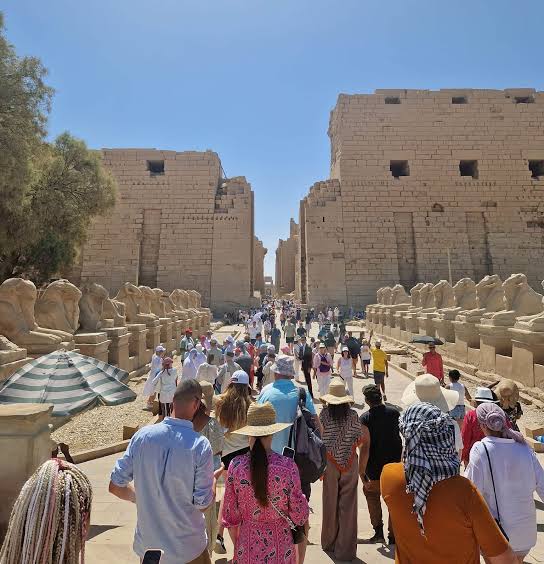
This heritage landscape includes major monuments on both banks of the Nile. Karnak and Luxor Temple stand on the east bank, while royal tombs, mortuary temples and other archaeological remains occupy the west bank.
The international importance of the area comes from its exceptional evidence of ancient Egyptian civilization, including royal architecture, religious practice, artistic traditions and burial customs.
Conservation is essential to protect these monuments for future generations. Responsible tourism supports appreciation of their history while helping visitors understand the importance of archaeological preservation.
Why the Temple of Hatshepsut Is One of Luxor's Most Remarkable Ancient Monuments
The Temple of Hatshepsut offers a distinctive view of ancient Egyptian history. Its three terraces, colonnades and reliefs reveal how architecture and religious imagery could express the authority of a pharaoh and preserve the memory of a reign.
The story of Hatshepsut adds another dimension to the site. From her rise to power during the Eighteenth Dynasty to her ambitious construction projects and the expedition to Punt, her reign provides insight into the political and commercial life of New Kingdom Egypt.
Whether you are researching Queen Hatshepsut, exploring the architecture of Deir el-Bahari or planning a cultural visit to Luxor, this monument is an important part of understanding ancient Thebes. Take time to look at the reliefs, observe the relationship between the temple and its setting, and learn about the history behind the surviving stonework.
Common questions
Frequently Asked Questions About the Temple of Hatshepsut
1. Where is the Temple of Hatshepsut located?
The Temple of Hatshepsut is located at Deir el-Bahari on the west bank of the Nile in Luxor, southern Egypt.
2. Who was Queen Hatshepsut?
Hatshepsut was an Eighteenth Dynasty ruler who first acted as regent for Thutmose III and later assumed the full position of pharaoh.
3. Why is the Temple of Hatshepsut famous?
It is famous for its three terraced levels, elegant colonnades, dramatic cliff setting and reliefs depicting royal rituals and the expedition to Punt.
4. When was the Temple of Hatshepsut built?
The temple was constructed during Hatshepsut's reign in the fifteenth century BCE, during Egypt's Eighteenth Dynasty.
5. Who designed the Temple of Hatshepsut?
The temple is traditionally associated with Senenmut, a high-ranking official who served Hatshepsut.
6. What is Deir el-Bahari?
Deir el-Bahari is an archaeological area on Luxor's west bank containing Hatshepsut's temple and other important mortuary monuments.
7. What was the Land of Punt?
Punt was a trading region visited by ancient Egyptian expeditions. Its exact location remains debated, but it is commonly associated with regions around the southern Red Sea and the Horn of Africa.
8. What can visitors see at the temple?
Visitors can explore the terraces, colonnades, surviving reliefs, inscriptions and the temple's dramatic architectural setting.
9. What is the best time to visit?
Many visitors prefer cooler months and an early start to avoid the strongest daytime heat. Check current opening hours before travelling.
10. How much are Temple of Hatshepsut tickets?
Ticket prices and admission conditions can change. Check the official Egyptian Ministry of Tourism and Antiquities website for current rates.
11. What attractions are near Hatshepsut's temple?
Nearby attractions include the Valley of the Kings, the Valley of the Queens, Medinet Habu, Deir el-Medina and the Colossi of Memnon.
12. Is the Temple of Hatshepsut part of a UNESCO World Heritage Site?
The temple belongs to the wider heritage landscape of Ancient Thebes with its Necropolis, which was inscribed on the UNESCO World Heritage List in 1979.
Historical References and Further Reading
This article is an educational introduction to Queen Hatshepsut and her mortuary temple. The following institutional resources provide additional historical information and official visitor guidance.
- Egypt's Ministry of Tourism and Antiquities — Temple of Hatshepsut
- Egypt's Ministry of Tourism and Antiquities — Deir el-Bahari
- National Museum of Egyptian Civilization — Hatshepsut
- The Metropolitan Museum of Art — Hatshepsut: From Queen to Pharaoh
- UNESCO World Heritage Centre — Ancient Thebes with its Necropolis
Opening hours, admission prices and visitor restrictions can change. Confirm current arrangements with official sources before visiting.